
Tea and the Philosophy of Korean Teaware
As you grow to love tea, interest naturally extends to the tools that accompany it. With time, as favorite teas accumulate, so do the ceramics that feel right for each one. In East Asian tea culture, teaware is never just decorative. It carries a deep philosophical background that reflects how people understood the world, discipline, and daily life.
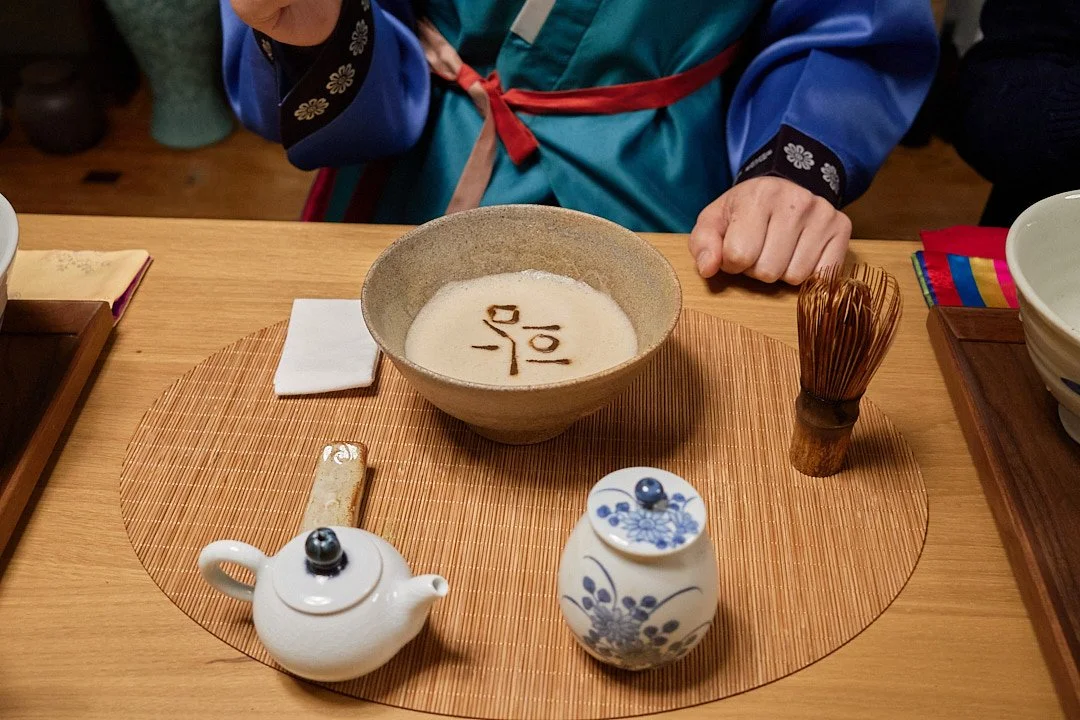
©️Heesum Tea room
In Goryeo Korea, tea culture was closely intertwined with Buddhism. Tea existed at the boundary between spiritual practice and everyday living. It was a means of calming the mind, supporting meditation, and sustaining quiet focus. For this reason, the tea table of the Goryeo period favored celadon. Its clear and serene glaze, often described as bisek, carries a soft and balanced light. Celadon gently receives the color of powdered tea, allowing it to appear calm rather than striking. The vessel does not dominate the tea but supports it.

©️Heesum Tea room
As Korea entered the Joseon period, the role of tea shifted along with society itself. Confucian values became central, and tea was understood as a way to practice propriety and order within daily life. Tea moved further into the rhythms of the household. During this time, white porcelain became the primary companion to tea. Baekja was valued not for decoration but for function and clarity. Its plain surface reveals the color and density of the tea without concealment. It is restrained rather than ornate, but its attitude is clear and deliberate.

©️Heesum Tea room
Celadon and white porcelain belong to different eras and different systems of thought, yet both place tea at the center. Each reflects how people related to discipline, beauty, and meaning in their time. Because of this, the ceramic placed on a tea table is never just a container. It becomes a vessel for thought and intention.
To drink tea, then, may also be to drink in the mindset of the era that shaped it. The bowl in your hands quietly carries that history, asking only that you slow down enough to notice.
