
A Thousand Years of Korean Powdered Tea Culture
©️Heesum Tea room
Korean powdered tea culture is not a recent trend or a modern reinterpretation. It is a tradition that has crossed more than a thousand years. During the Goryeo Dynasty, tea culture was deeply rooted in royal courts and Buddhist temples, where tea was valued not only as a drink but as a disciplined practice connected to ritual, meditation, and refinement. As tea became more widely available, it moved beyond elite circles. Ordinary people could enjoy tea daily at tea houses, making it part of everyday life rather than a luxury reserved for a few.
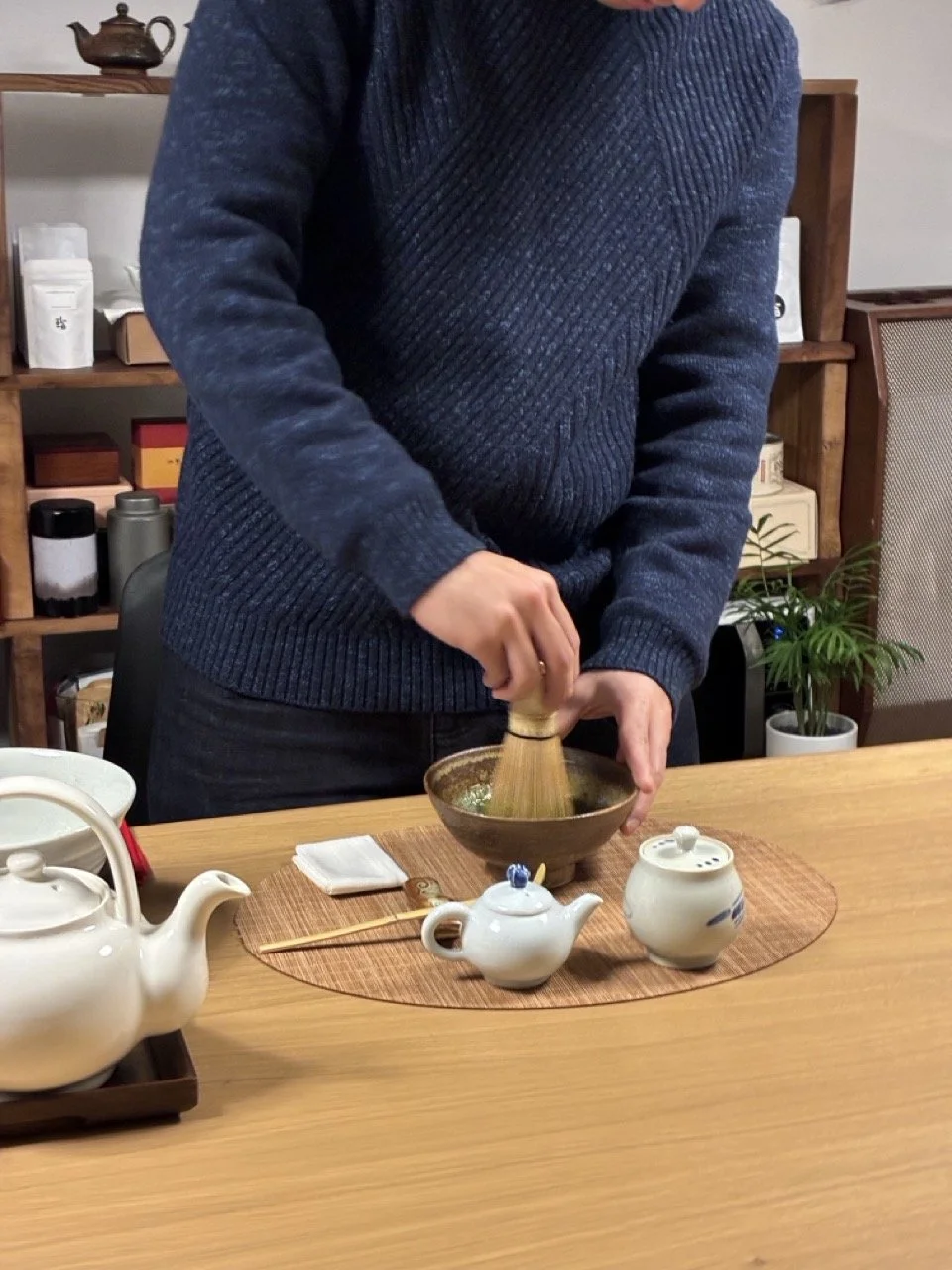
The reason powdered tea is whisked is practical and intentional. Whisking evenly blends the fine tea powder with hot water, preventing clumps and uneven concentration. When the foam rises gently on the surface, the flavor becomes balanced. The taste does not lean too bitter or too thin, and the texture remains smooth from the first sip to the last. This consistency is central to the experience of powdered tea.
The tool used for this process is the chasen, a bamboo whisk. Bamboo provides just enough flexibility to break down the powder while remaining soft enough to protect delicate tea bowls. It is a tool shaped by centuries of trial, designed to serve both the tea and the vessel holding it.
Today, powdered tea in Korea extends beyond green tea matcha. Seasonal and functional varieties are increasingly appreciated. Mugwort matcha carries the freshness of early spring. Ginseng matcha, when whisked, softens its bitterness and quickly restores physical energy. Roasted hojicha matcha offers a nutty and light flavor that feels comforting and easy to drink. Each powdered tea responds differently to the body, the season, and the moment.
Choosing a powdered tea based on how you feel that day can become a quiet daily ritual. Perfect foam is not required at the beginning. The act of whisking itself is part of the learning. At Heesum Tea Room, you are welcome to practice making powdered tea foam slowly, without pressure, and experience this long Korean tradition with your own hands.

©️Heesum Tea room
