
Drinking Life Through Coin Shaped Tea
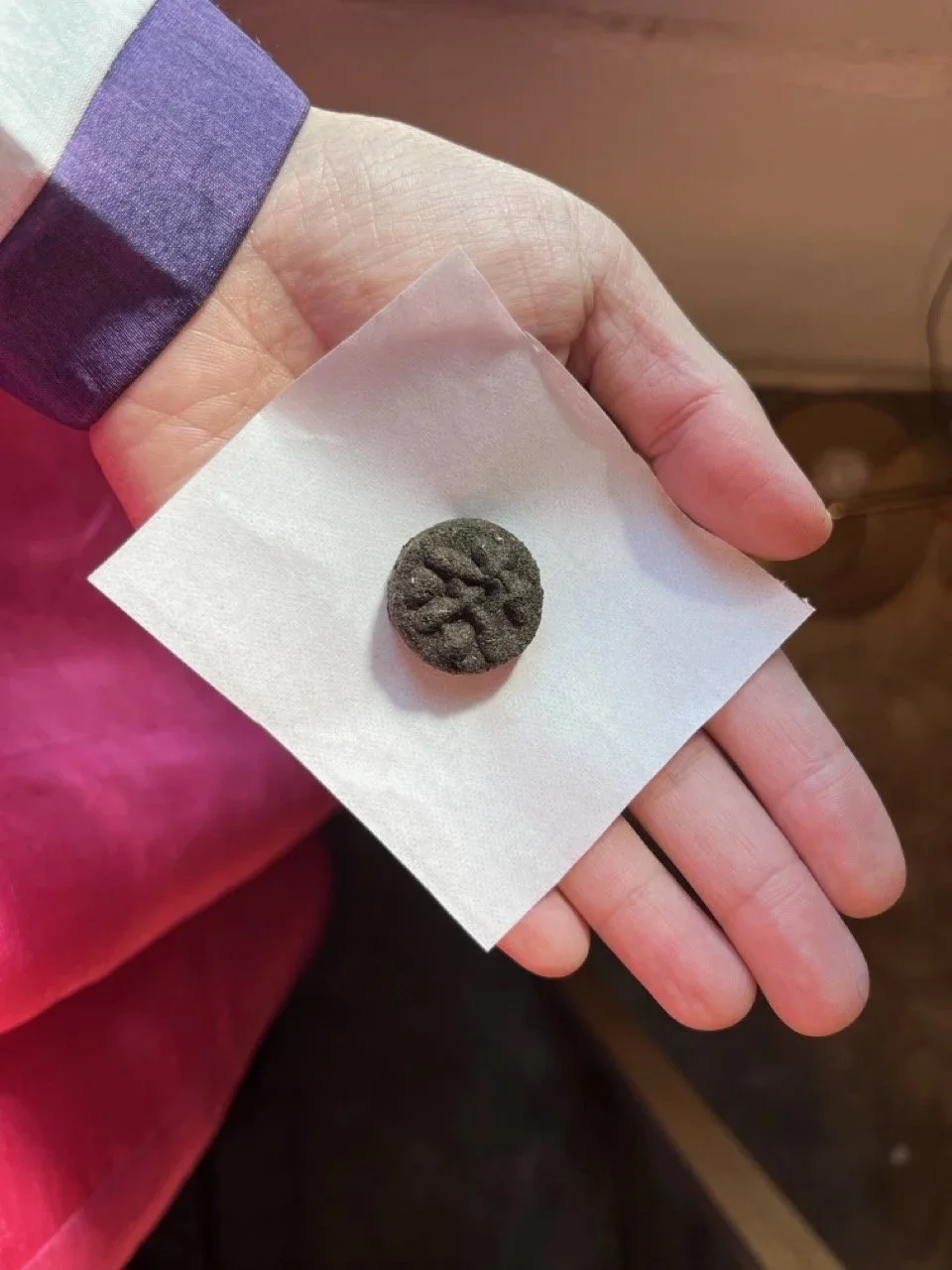
©️Heesum Tea room
There is a kind of tea shaped like a coin. Records show that coin shaped compressed tea called jeoncha was excavated from ancient Goguryeo tombs. This suggests that a culture of compressed tea existed on the Korean peninsula even before loose leaf tea became common. Its form may recall Chinese pu erh tea, but similar tea traditions developed in Korea in their own distinct ways. Cheongtaejeon from Jangheung in South Jeolla Province is one such example. Reconstructed from historical records and local memory, it reconnects the tradition of cake tea with the present day.
Yet the tea that draws me most is the tea cake of Dasan Jeong Yak yong, which has now disappeared. What we know of Dasan’s tea cake survives only in a brief passage from a letter he wrote to one of his students.
“Now that it is Gogu, I would like you to send tea again. However, the tea cake you sent last time was not very good, as the powder was too coarse. It must be steamed three times and dried three times, then ground very finely. It must also be thoroughly kneaded with stone spring water and pounded like clay to make a cake so that it becomes cohesive enough to consume. Do you understand?”
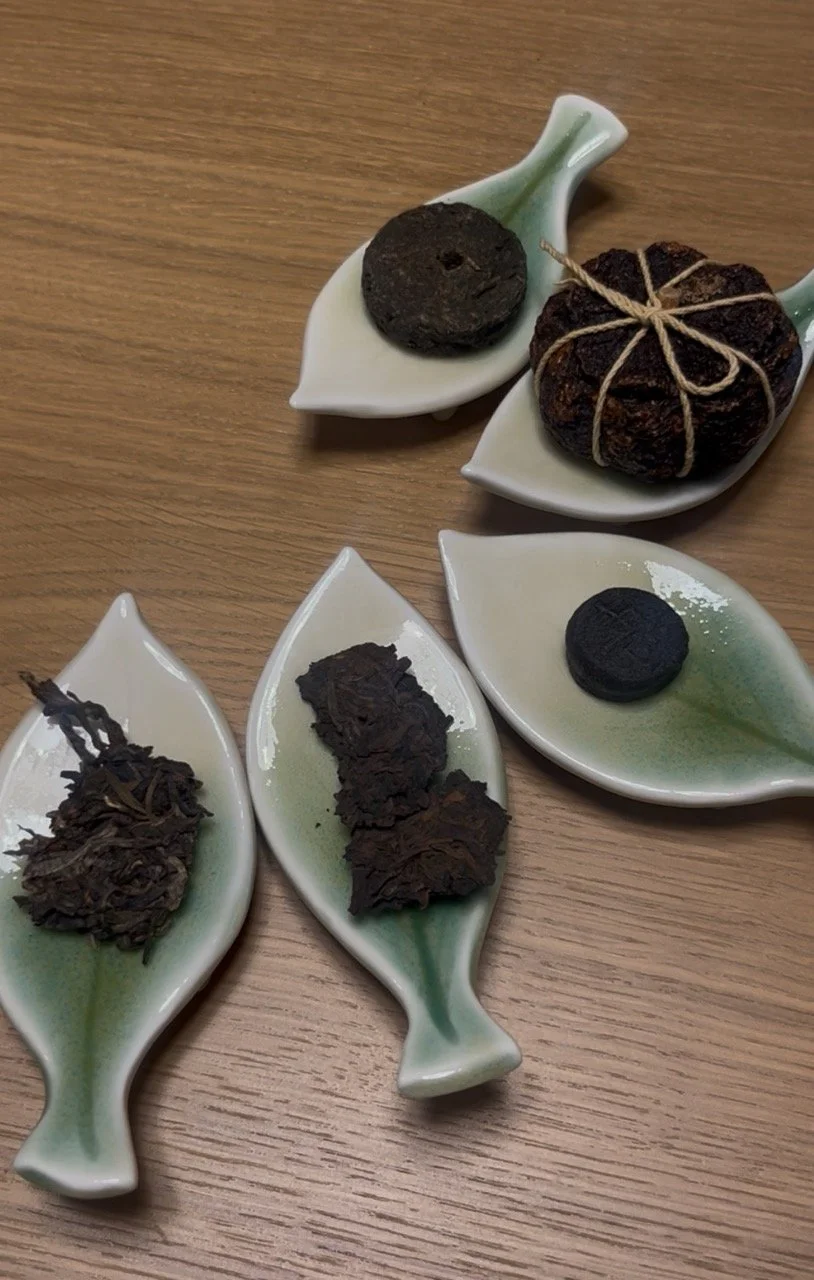
©️Heesum Tea room
These days, I am trying to recreate Dasan’s tea cake myself. When the round, coin shaped tea meets water and slowly loosens, what remains in the bowl is no longer its form but a gentle green warmth. Sitting before it, I feel less like I am drinking tea and more like I am taking something in that awakens both body and mind. For Dasan, tea was likely not a matter of taste or refined pleasure, but something closer to medicine, something that soothed the accumulated anxieties and fatigue of exile and allowed him to steady himself and continue each day.
The way tea is consumed has changed gradually over time. In its earliest use, tea leaves were likely chewed like medicine, with attention paid to the body’s response. At that time, the purpose of tea was to sense physical change. Later, tea leaves were cooked and boiled in water, and tea began to take root as food, something closer to nourishment that filled the stomach and warmed the body. As time passed, tea leaves were steamed, pressed into molds, and dried. When needed, pieces were broken off and boiled in a pot. This method was practical for storage and transport.
In fact, compressed tea became a major commodity in the tea horse trade after the Song dynasty, traveling to Tibet and surrounding regions. As horses and tea were exchanged, people in those areas relied on tea as an important source of energy and nutrition. Later still, tea leaves were ground into fine powder and prepared with froth, a period when the condition of the tea was closely observed. Tea gradually became an object of sensory attention, and eventually, leaving the leaves whole and steeping them in a teapot became the norm, allowing tea to settle into daily life as a matter of personal taste.
The tools used and the methods of drinking tea always reflect the thinking of their time. I read poems and tea writings that take tea as their subject, retracing the long path tea has traveled. And today again, with a teacup in my hands, I quietly take in the story of that long passage of time.
